Wardrobe Types
Sliding Wardrobe
Space-saving and clean — shutters that travel instead of swing.
Will this work
in your room?
Sliding wardrobes are the practical choice for bedrooms where there is limited clearance in front of the wardrobe. The shutters travel along a track parallel to the cabinet face, requiring no swing space. They look clean and contemporary when the track quality, roller system, shutter weight, and finish are planned properly. A sliding wardrobe with a poor-quality track system becomes the most frustrating piece of furniture in the room.
Works best when
- Bedrooms with limited walking space — less than 700mm — in front of the wardrobe wall
- Rooms where the bed is close to the wardrobe, leaving minimal clearance
- Long wardrobe walls — 8 to 14 feet — in contemporary modern interiors
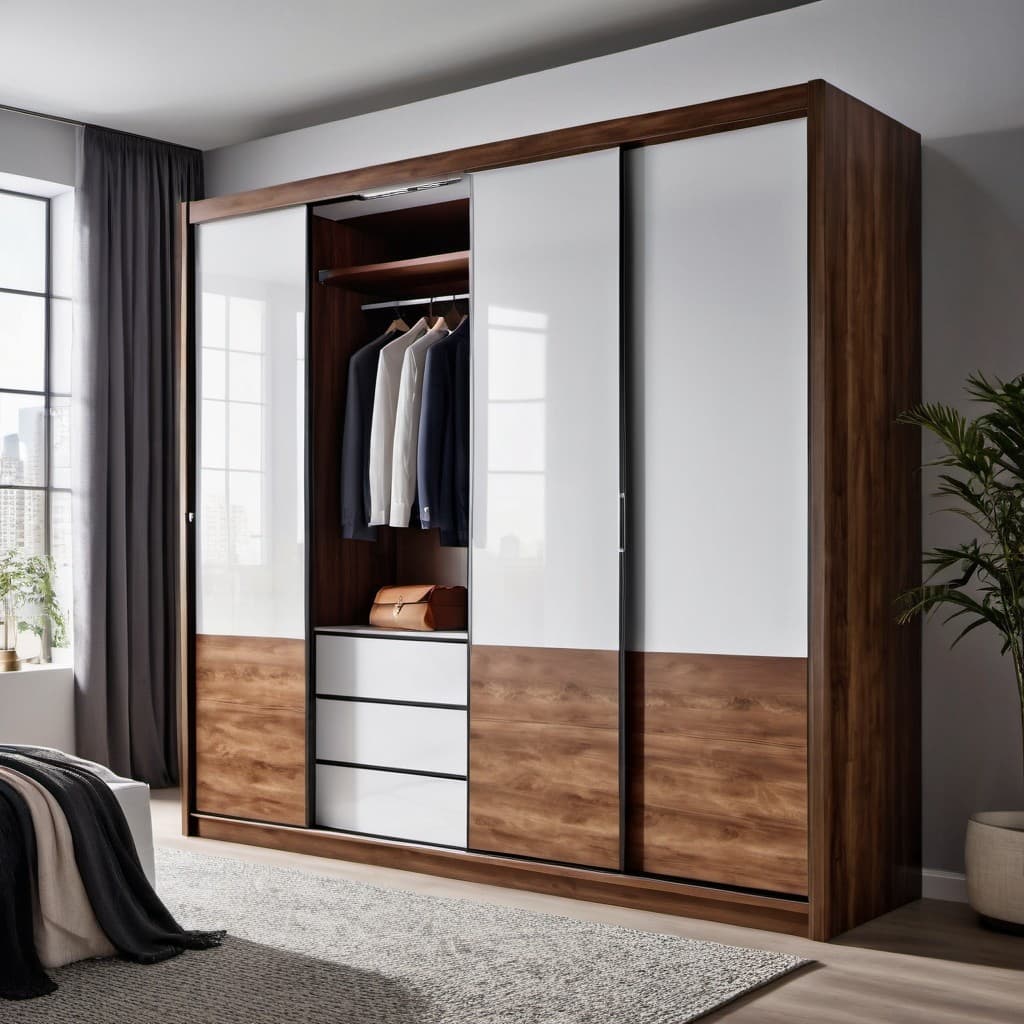
Reference mood for a Sliding Wardrobe planned with ARITSAN's storage and finish language.
What goes inside
- Wide internal sections aligned with each sliding panel for clear, unobstructed access
- Full-height hanging zones planned section-by-section to avoid blocked reach
- Mirror or glass panels on shutters that serve both storage and daily dressing function
- Loft storage above the main carcass for seasonal or occasional-use items
Design considerations
What to know before
you finalise this type.
- No door swing — bedside tables, furniture, and passageways remain completely unobstructed.
- Creates a very clean, continuous wall panel look when proportions are well-handled.
- Track and roller quality is the single most important specification — prioritise this over finish.
- Anti-jump rollers and soft-close mechanisms are worth specifying for reliable daily performance.
- Excellent for combining wood, glass, and mirror panels on the same wardrobe facade.
Designer's note
Sliding wardrobes are excellent for space-saving but premium daily performance depends entirely on the track and roller quality. Cheap tracks bind, jump, and fail within 2–3 years. The shutter finish can be upgraded later. The track system, once installed, cannot be easily replaced.
Finish direction matters here
The same wardrobe type feels very different in laminate versus PU, or veneer versus glass. Before the order is finalised, ARITSAN helps you see the combination that suits your room light, usage, and design direction.
Explore wardrobe finishesKey Specifications
What to specify
before signing off.
- Track system: specify branded systems — Hettich, Ebco, Hafele, or equivalent quality
- Roller quality: anti-jump, soft-close rollers — confirm this before signing off
- Shutter weight: heavier panels (glass, thick acrylic) need heavier-rated track systems
- Carcass depth: 24 inches minimum for usable internal hanging
- Bottom guide: floor-fixed bottom guide prevents panel swing in daily use
Plan Carefully
Common planning
points to get right.
- Track and roller quality is the most critical specification — do not compromise here for cost
- Sliding shutters access one or two sections at a time — plan internal section widths to match
- Internal drawers in sliding wardrobes can be harder to reach — confirm this in the design
- Avoid very heavy glass or thick acrylic unless the track rating supports the panel weight
- Dust protection on tracks matters in Indian homes — confirm brush seal or dust guard is included
Works Well In
Compact bedrooms in apartments where floor space is at a premium
Master bedrooms with beds close to the wardrobe wall
Long wardrobe walls where a continuous clean panel look is a design priority
Rooms where the visual weight of a sliding wall panel suits the design direction
Common Questions
Questions about
the sliding wardrobe.
Need help planning your wardrobe?