Divide space without closing it off.
Internal Partitions
Light, elegant partition systems that divide rooms without making the space feel closed or heavy.
Why this matters
Most Indian homes today are short on rooms but long on shared open space. Internal partitions are the difference between a flexible, well-zoned home and one that feels either too open or too chopped up.
ARITSAN Note
A great partition feels like it was always meant to be there. The mistake is treating it as a piece of glass dropped between two rooms, instead of as a small piece of architecture with its own framing, finish, and detailing logic.
Best suited for
- Open-plan homes that need visual separation
- Bedrooms, dressing areas, and study corners
- Spaces where natural light should still pass through
- Projects avoiding full brick or block partitions
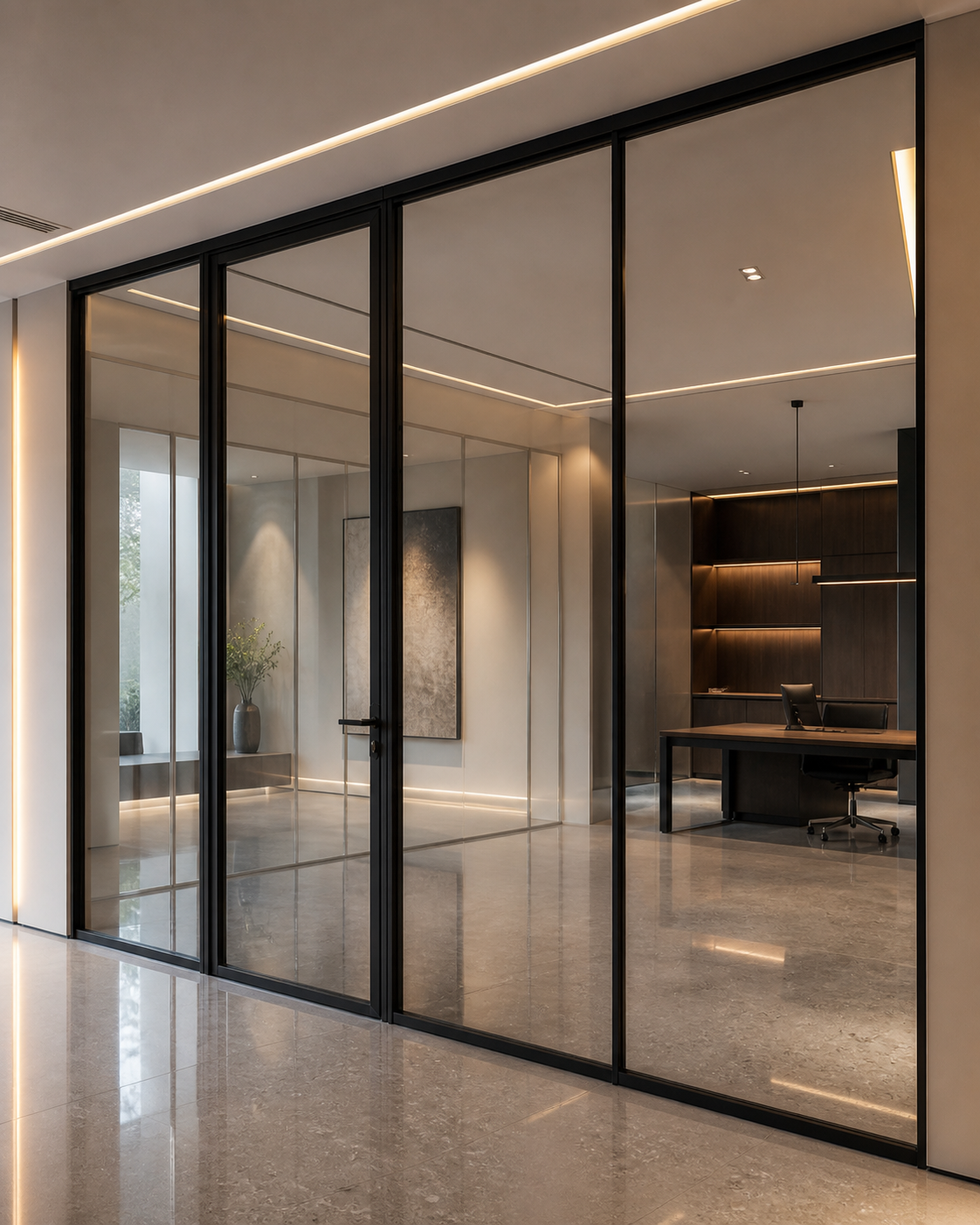
A reference image for a typical Internal Partitions application. Final design, configuration, and hardware will always be matched to your actual site.
Why clients choose it
- Faster and cleaner than conventional masonry work
- Can be glass-led, panel-led, or a hybrid of both
- Keeps spaces feeling more open and layered
- Can be designed for privacy, light, or both
What to check before finalising
- Floor and ceiling alignment affect final detailing
- Switches and electrical planning should happen early
- Full-height glass zones need correct safety glass specification
Specifications to Check
What separates a great installation
from a disappointing one.
Glass type
Clear, fluted, frosted, reeded, or tinted — each carries a different mood and privacy level.
Frame system
Slim aluminium, steel-look, or frameless — sets the architectural language.
Glass thickness
Usually 8mm or 10mm toughened for safety and stability in floor-to-ceiling spans.
Sliding versus fixed versus pivot
Decided by space, usage frequency, and visual intent.
Acoustic performance
Partitions are not full walls; expect sound reduction, not silence.
Floor and ceiling channels
Detailing here makes the partition look architectural rather than added-on.
Hardware finish
Handles, hinges, and locks should match the rest of the home's hardware language.
Safety glass certification
Non-negotiable for any large pane in a lived-in space.
Plan Carefully
What to think through before you sign off.
- Fully clear glass kills privacy; frosted, fluted, or film treatments usually work better in homes.
- Frame finish must coordinate with door hardware, window profiles, and metal accents elsewhere.
- Acoustic expectations should be set early — partitions reduce sound but rarely block it fully.
- Sliding direction and door swing must respect actual furniture layouts, not just floor plans.
- Floor-to-ceiling partitions need careful ceiling detailing or they look like an afterthought.
- Cleaning access for both sides of the glass matters more than people expect.
Works Well In
Where this system makes the most sense.
- 01Open-plan living and dining layouts
- 02Compact apartments needing flexible zoning
- 03Home offices that double up for guests
- 04Master suites needing dressing-area separation
- 05Naturally lit corridors and entry foyers
Core Build
Core materials and build choices
Toughened or Laminated Glass
Used where light flow and a refined look are important.
Gypsum or Composite Panels
Good for opaque portions where privacy or service runs are required.
Slim Aluminium Framework
Provides clean edges, structural support, and a modern finish line.
Common Questions
Questions people ask
about internal partitions.
Get a Quote
Interested in Internal Partitions?
- Free site visit for projects in Delhi NCR.
- Detailed product specifications and samples provided.
- Transparent, itemised pricing with no hidden costs.