Large-scale glazing with architectural presence.
Glass Curtain Walls
Architectural facade systems for commercial buildings that need strong structure, cleaner lines, and large glazed elevations.
Why this matters
A curtain wall is a building's face. It defines how the structure is read from outside and how the spaces feel from inside. Done well, it is breathtaking. Done poorly, it leaks, overheats, and becomes a long-term liability.
ARITSAN Note
Curtain walls look effortless from the street and demand serious coordination behind the scenes. Architect, structural engineer, façade consultant, glass supplier, and installation team all have to align before the first panel goes up. ARITSAN helps bring the right team together so the façade performs for decades, not just on day one.
Best suited for
- Commercial facades and showrooms
- High-rise and institutional projects
- Buildings where daylight and exterior expression matter
- Projects needing engineered facade packages
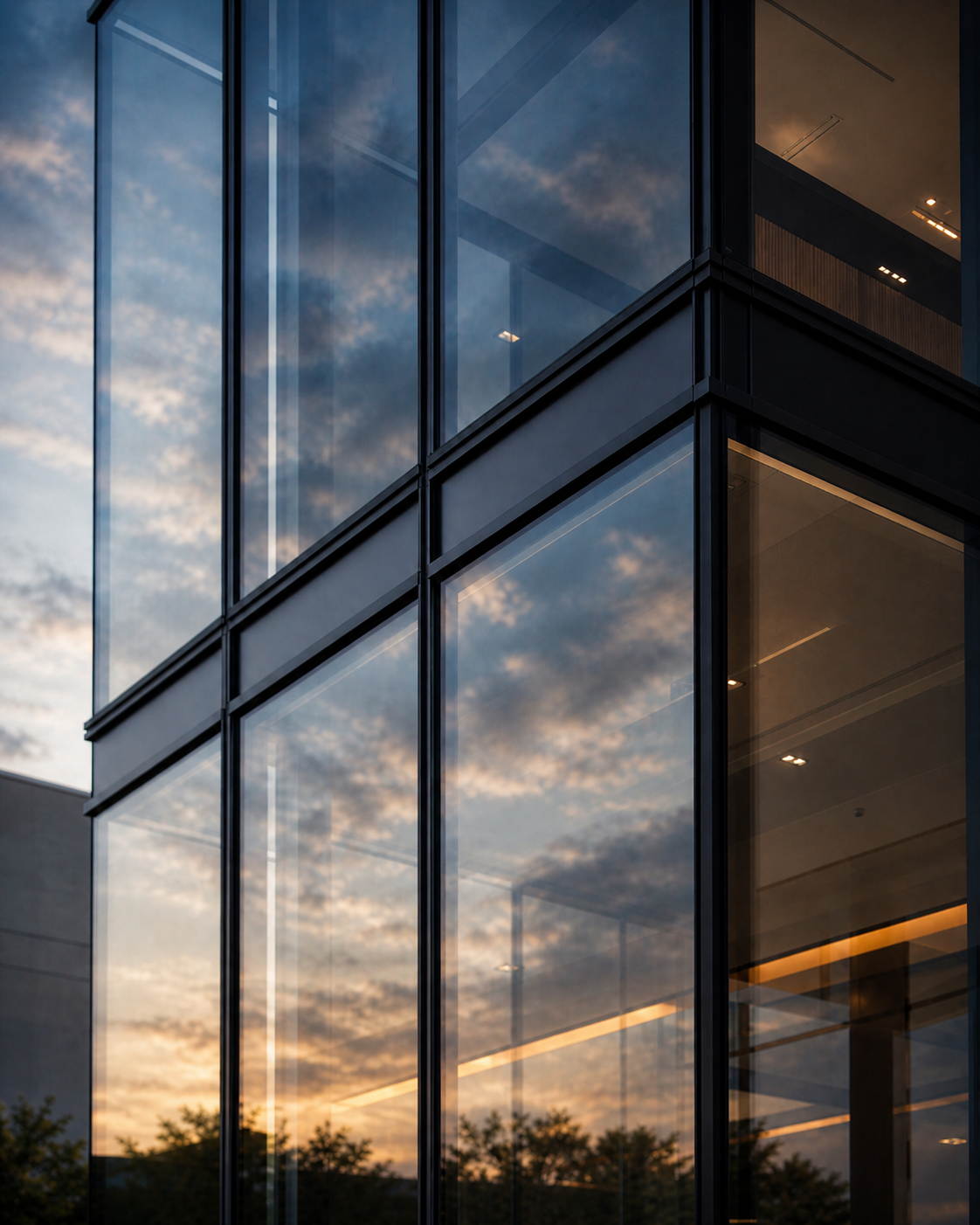
A reference image for a typical Glass Curtain Walls application. Final design, configuration, and hardware will always be matched to your actual site.
Why clients choose it
- Creates dramatic glass-heavy elevations
- Can be built around performance targets for wind and water
- Works with a wide range of glass and finish combinations
- Supports a more premium commercial identity
What to check before finalising
- Needs engineering, shop drawings, and strict installation sequencing
- Glass performance should be selected for heat and orientation
- Maintenance access and facade cleaning need early planning
Specifications to Check
What separates a great installation
from a disappointing one.
System type
Stick, unitised, semi-unitised, or structural glazing — decided by building scale and timeline.
Glass specification
DGU, laminated, low-E, solar control — chosen against orientation and climate.
Wind load and structural calculation
Engineered against the building's height, location, and exposure.
Frame and bracket system
Aluminium quality, steel sub-structure, and fixings carry the entire load.
Sealant grade
Structural and weather sealants are not interchangeable; both have to be specified properly.
Thermal performance
Critical for energy use, AC sizing, and occupant comfort behind large glass spans.
Maintenance and cleaning access
BMU systems, anchor points, and rope access plans must be designed in.
Plan Carefully
What to think through before you sign off.
- Heat gain on west and south façades must be addressed at the glass specification stage, not later.
- Safety glass — laminated and toughened where required — is a code and life-safety issue.
- Water sealing depends as much on detailing and workmanship as on sealant grade.
- Structural support and anchorage have to be designed by qualified engineers, not assumed.
- Cleaning and maintenance access must be planned during design; retrofitting it is painful and expensive.
- Installation discipline — sequence, weather, and quality control — separates a great curtain wall from a leaking one.
Works Well In
Where this system makes the most sense.
- 01Corporate and tech office buildings
- 02Hotels, lounges, and restaurants with views
- 03Premium retail and showroom frontage
- 04Double-height residential living spaces
- 05Atrium and lobby façades in larger homes
- 06Institutional buildings with daylight requirements
Core Build
Core materials and build choices
Facade Aluminium Mullions
Carry the structural load while keeping sight lines controlled.
High-Performance Glass
Selected for solar control, visible light, and acoustic needs.
Structural Silicone and Gaskets
Critical for movement, weather sealing, and long-term facade performance.
Common Questions
Questions people ask
about glass curtain walls.
Get a Quote
Interested in Glass Curtain Walls?
- Free site visit for projects in Delhi NCR.
- Detailed product specifications and samples provided.
- Transparent, itemised pricing with no hidden costs.