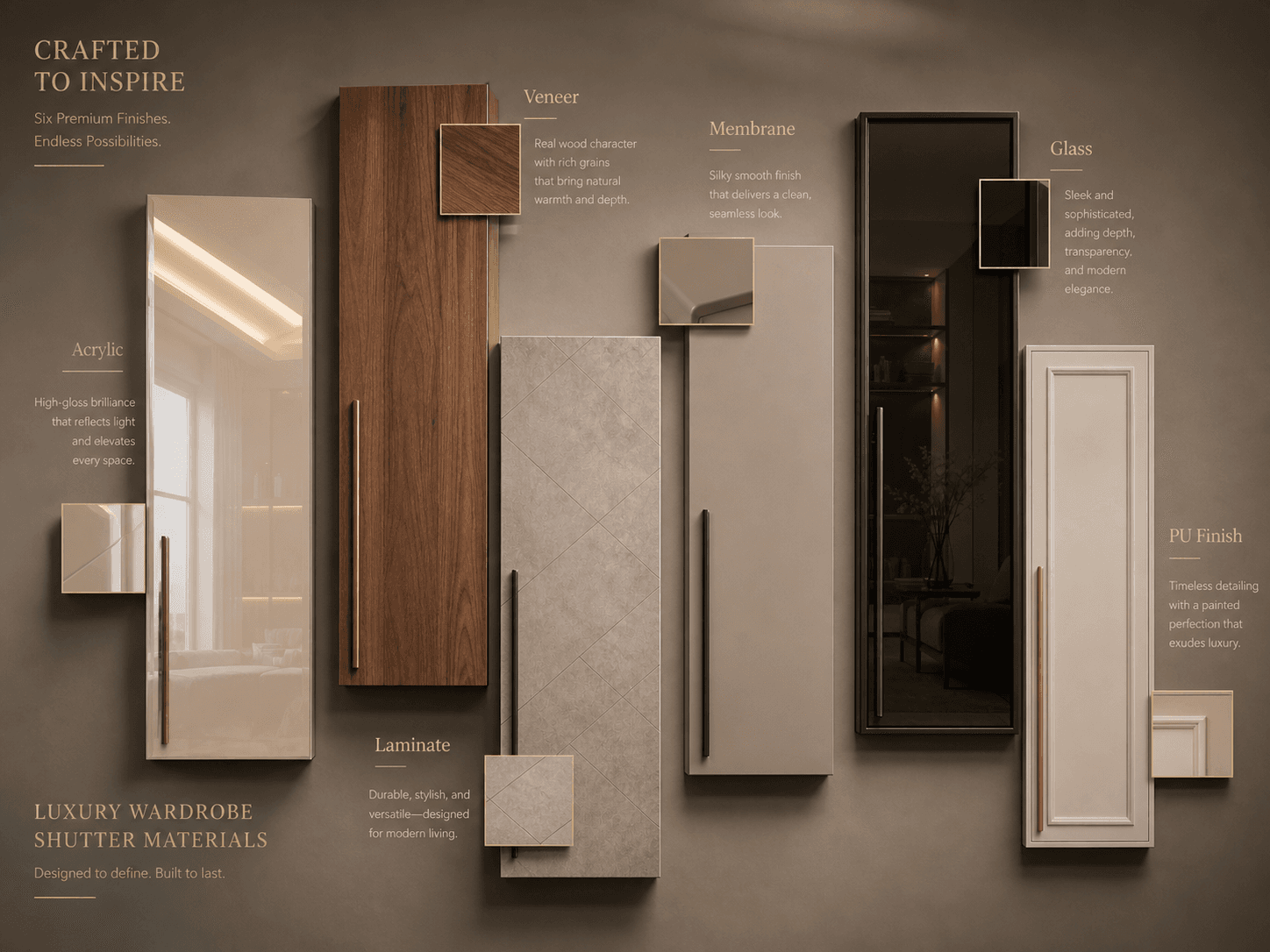
Most wardrobe decisions start with size and layout. The finish — the surface you actually see and touch every single day — usually gets decided in the last five minutes of a showroom visit, under pressure, with a designer pointing at samples.
That is the wrong approach. The finish is what your bedroom looks at you from across the room every morning. It is what ages gracefully or starts looking tired within two years. It is what determines how much you are scrubbing fingerprints off the doors and whether your wardrobe survives a Mumbai monsoon or a Delhi summer without swelling, peeling, or losing its shine.
This guide covers all six major wardrobe finishes used in Indian modular wardrobes — laminate, acrylic, PU, veneer, glass, and mirror — and gives you a clear framework to decide which one (or which combination) actually makes sense for your room, your household, and your budget.
First: What Does "Finish" Actually Mean?
A wardrobe has two distinct parts: the carcass (the internal structure — typically BWP plywood or HDHMR board) and the shutters (the visible doors and panels). The "finish" refers to the surface material applied to the shutters and visible panels — what you see, touch, and clean.
The carcass almost never changes across finish options. What changes is the shutter material and surface treatment, which affects the look, texture, durability, maintenance, and cost. Getting this distinction right stops you from comparing apples and oranges when a contractor quotes you for "veneer" versus "laminate." Both can sit on the same carcass. The question is purely about the surface.
The 6 Main Wardrobe Finishes Explained
1. Laminate
Laminate is the default wardrobe finish in India — and it deserves that position. It is produced by bonding thin layers of resin-soaked kraft paper onto a board substrate, and it comes in three surface types: matte, glossy, and textured.
What it looks like: Almost anything you want. Wood grains, solid colours, soft textures, stone-look patterns. The design range is enormous.
Why it works for Indian homes: Laminate handles humidity reasonably well, cleans easily, resists everyday scratches, and does not react dramatically to temperature swings. Matte and textured laminates, specifically, hide fingerprints and minor scuffs — which matters in bedrooms used by children or in high-traffic master bedrooms.
Where it fits: Kids’ rooms, guest bedrooms, rental properties, value-conscious builds, and any wardrobe where the priority is durability over showroom-level glamour.
Honest trade-off: The look, while clean, rarely achieves the richness of veneer or the luxury sheen of acrylic. If you have strong aesthetic expectations for a master bedroom, laminate alone may feel underwhelming unless you choose premium textured options or combine it with another finish.
Budget level: Most economical. See ARITSAN’s laminate wardrobe finishes for specific options.
2. Glossy Acrylic
Acrylic is laminate’s premium, high-glamour cousin. It is a high-gloss sheet bonded onto board, delivering a mirror-like, deep-shine surface that makes rooms feel instantly more luxurious.
What it looks like: Think showroom-quality gloss. Rich colour saturation, reflective depth, and an almost wet-look shine. Popular choices are crisp whites, deep navies, champagne golds, and warm creams.
Why it works in certain bedrooms: Acrylic bounces light around the room — useful in bedrooms with limited natural light. It pairs exceptionally well with warm ambient lighting and gold or black hardware.
Where it fits: Master bedrooms, walk-in wardrobes, and design-led spaces where you want the wardrobe wall to make a statement.
Honest trade-off: Acrylic shows fingerprints relentlessly. In households with children or heavy daily traffic, you will be cleaning those doors frequently. It also scratches more easily than laminate — micro scratches from keys, rings, or rough fabrics accumulate over years.
Budget level: Premium. See ARITSAN’s acrylic wardrobe finish page.
3. PU (Polyurethane) Finish
PU is a spray-painted finish — the shutters are painted and then sealed with a polyurethane coating that can be matte, satin, or glossy. The result is smooth, seamless, and highly customisable.
What it looks like: Perfectly even painted surface, no grain, no texture — just a clean, flawless coat. The colour range is effectively unlimited. Matte PU in particular has a sophisticated, tactile quality that is difficult to replicate with laminate or acrylic.
Where it fits: Design-led master bedrooms and walk-ins, especially minimal handle-less wardrobe designs where you want the surface to disappear into the room.
Honest trade-off: PU can chip on sharp corner impacts — keys, bangles, or objects hitting the shutter edge. It is not as impact-resilient as laminate on corners. Soft-close hardware significantly reduces wear on PU doors by preventing slam impacts.
Budget level: Premium to ultra-premium. See ARITSAN’s PU finish wardrobe page.
4. Natural Wood Veneer
Veneer uses a thin slice of real wood — typically teak, oak, walnut, or wenge — bonded onto a board substrate. You get genuine wood grain and warmth at a fraction of solid wood cost.
What it looks like: Real wood. Not wood-print laminate, not embossed texture — actual wood grain with natural variation, depth, and warmth. No two veneer panels are identical, which is what gives veneer wardrobes their premium character.
Where it fits: Premium master bedrooms, heritage-style apartments, bedrooms aiming for a resort or boutique-hotel feel. Veneer ages gracefully — the patina deepens over time rather than looking worn.
Honest trade-off: Real wood reacts to moisture. In very humid climates — coastal cities, ground floors, rooms near bathrooms — veneer needs proper sealing and occasional maintenance. Persistent humidity or harsh sunlight over time can affect the surface. It rewards care rather than neglect.
Budget level: Premium. See ARITSAN’s veneer wardrobe finish page.
5. Glass
Glass shutters — clear, frosted, or tinted — bring a completely different quality to wardrobe design. They are light, airy, and reduce the visual heaviness of a solid wardrobe wall, which makes rooms feel larger and more open.
What it looks like: Clear glass shows your wardrobe interior (useful if you organise carefully). Frosted glass diffuses the view while remaining airy. Tinted glass adds privacy and a subtle colour wash.
Where it fits: Guest bedrooms, contemporary master bedrooms, smaller rooms that need visual lightness, sliding wardrobe systems where the large door face benefits from a lighter look. Pairing glass panels with internal LED lighting creates a boutique-showroom effect.
Honest trade-off: Clear glass demands an organised interior — it shows everything inside. Fingerprints can be an issue, and glass panels cost more to replace if cracked compared to laminate.
Budget level: Mid-range to premium. See ARITSAN’s glass wardrobe finish page.
6. Mirror
Mirror wardrobes do double duty — they function as full-length mirrors and make the room feel significantly larger by doubling the perceived space. For urban apartments where bedrooms are compact, this is often transformative.
Where it fits: Compact bedrooms, rooms with limited natural light, dressing-focused spaces, and walk-in wardrobe entry panels. A full-length wardrobe mirror also eliminates the need for a separate cheval or wall mirror.
Honest trade-off: Mirrors show every smudge and require consistent cleaning. Large reflective surfaces do not suit every bedroom style — in a room with busy wallpaper or many décor elements, floor-to-ceiling mirrors can feel overwhelming rather than expansive.
Budget level: Mid-range to premium. See ARITSAN’s mirror wardrobe finish page.
Quick Comparison at a Glance
| Finish | Look | Maintenance | Best For | Budget |
|---|---|---|---|---|
| Laminate | Versatile, clean | Low | Most bedrooms | Budget–mid |
| Acrylic | Glossy, luxurious | Medium–high | Master bedroom showcase | Premium |
| PU Finish | Seamless, painted | Medium | Design-led minimal | Premium |
| Veneer | Natural wood warmth | Medium | Warm, premium bedrooms | Premium |
| Glass | Airy, modern | Medium | Small rooms, contemporary | Mid–premium |
| Mirror | Reflective, space-expanding | Medium–high | Compact rooms, dressing | Mid–premium |
How to Decide: 5 Questions Worth Asking
1. How much natural light does the bedroom get?
Dark rooms — facing north or interior-facing apartments — benefit from reflective finishes. Acrylic, glass, or mirror panels bounce available light around and stop the room from feeling cave-like. Veneer and matte laminate work better in well-lit rooms where you want warmth rather than brightness.
2. Who uses this wardrobe and how intensively?
A master bedroom shared by two adults who keep things tidy is a very different context from a teenager’s wardrobe that gets slammed daily. For high-traffic, high-use wardrobes, textured matte laminate is the sensible choice. Acrylic and PU require more careful handling to stay looking their best.
3. Where in India are you?
This is the question most design articles skip, and it matters. If you are in a high-humidity city — Mumbai, Kochi, Kolkata, Chennai — veneer needs proper sealing and more attention. Laminate with moisture-resistant properties, acrylic, and glass are more forgiving in these climates. In drier climates like Delhi, Jaipur, or Ahmedabad, veneer is more stable and easier to maintain.
4. What is your honest wardrobe budget?
If your overall wardrobe budget is constrained, putting money into a better carcass material (BWP plywood rather than particleboard) and a mid-tier laminate will serve you better long-term than a premium finish on a weak carcass. The finish sits on top — but the structure underneath is what holds everything together for years.
5. What type of wardrobe are you building?
Sliding wardrobes display large door faces prominently — the finish choice carries significant visual weight. Glass, acrylic, and mirror finishes all work beautifully here. For walk-in wardrobes, the finish runs across an entire wall, so restraint (veneer, matte PU, matte laminate) usually works better than high-gloss across a large expanse. Our Wardrobe Planner can help you check sizing and type before finalising the design.
Why Designers Often Mix Finishes — and When You Should Too
Single-finish wardrobes are clean and safe. Mixed-finish wardrobes are what make a bedroom memorable. The most effective combinations in Indian homes:
- Matte laminate + mirror panels — the laminate grounds the design, the mirrors provide spatial benefit without overwhelming
- Veneer + frosted glass — organic warmth next to airy lightness, often used in alternating door panels
- Laminate + acrylic accents — one or two acrylic panels on an otherwise laminate wardrobe, reducing cost while adding a premium focal point
- PU matte + veneer — the painted section recedes while the veneer section anchors the design
The rule for mixing: contrast in texture, not in colour. A warm wood veneer beside a warm PU matte in a similar tone works beautifully. A shiny acrylic blue next to a textured terracotta laminate usually competes rather than complements. For styling ideas once your wardrobe is complete, see our wardrobe styling tips guide.
Common Mistakes to Avoid
Choosing finish before fixing the wardrobe type. The door system affects which finishes make sense. Read our sliding vs hinged wardrobes guide before your finish decision.
Going glossy for the whole wardrobe wall. Full-height, full-width acrylic across a 10-foot wardrobe wall can feel like a commercial showroom rather than a bedroom. Reserve gloss for moments — a focal panel, the centre section, one wardrobe in a multi-wardrobe room.
Ignoring the bedroom’s wall colour and flooring. The finish does not exist in isolation. A veneer wardrobe on a warm beige wall with light oak flooring is beautiful. The same veneer on a stark white wall with cool-grey tiles might look disconnected.
Underestimating maintenance willingness. If you cannot commit to regular gentle cleaning, choose a textured matte laminate that forgives fingerprints and minor marks. Acrylic and PU need consistent care to look their best.
Prioritising looks over carcass quality. The finish will not save a wardrobe built on poor-quality board. Ensure the carcass is BWP-grade plywood or HDHMR, regardless of which shutter finish you choose. For more on ARITSAN’s material approach and wardrobe types, visit our wardrobes page.
FAQs
Which wardrobe finish is most durable in Indian conditions?
Textured matte laminate on a BWP plywood carcass is the most consistently durable option across Indian climates — it handles humidity, heat, and everyday use without peeling, chipping, or showing wear visibly. Laminate also needs the least maintenance.
Is acrylic wardrobe finish worth the extra cost?
For a master bedroom where you want a premium, show-stopper look and are prepared to maintain it — yes. For high-use wardrobes or kids’ rooms, no. The fingerprint sensitivity and potential for micro-scratches will frustrate you within a year of daily use.
Can I mix laminate and mirror on the same wardrobe?
Absolutely — this is one of the most practical combinations in Indian bedrooms. Alternating laminate and mirror panels gives you the space-expanding benefit of mirrors while keeping costs controlled. It works especially well on sliding wardrobe systems.
Which finish works best in a humid city like Mumbai?
Moisture-resistant laminate, acrylic, and glass are the most stable options in high-humidity environments. Veneer requires proper sealing and care in these climates. Avoid particleboard carcasses entirely in humid cities regardless of which finish you choose for the shutters.
Does PU finish chip easily?
PU can chip on sharp corner impacts — keys, bangles, or objects hitting the shutter edge. The surface itself is hard and resistant to daily cleaning, but not as impact-resilient as laminate at corners. Soft-close hardware significantly reduces wear on PU doors by preventing slam impacts.
Not sure which finish suits your bedroom?
Share a few photos of your room and your wardrobe size, and ARITSAN’s designers will suggest 2–3 finish combinations that work with your light, usage pattern, and budget.
Book a Free Design Consultation